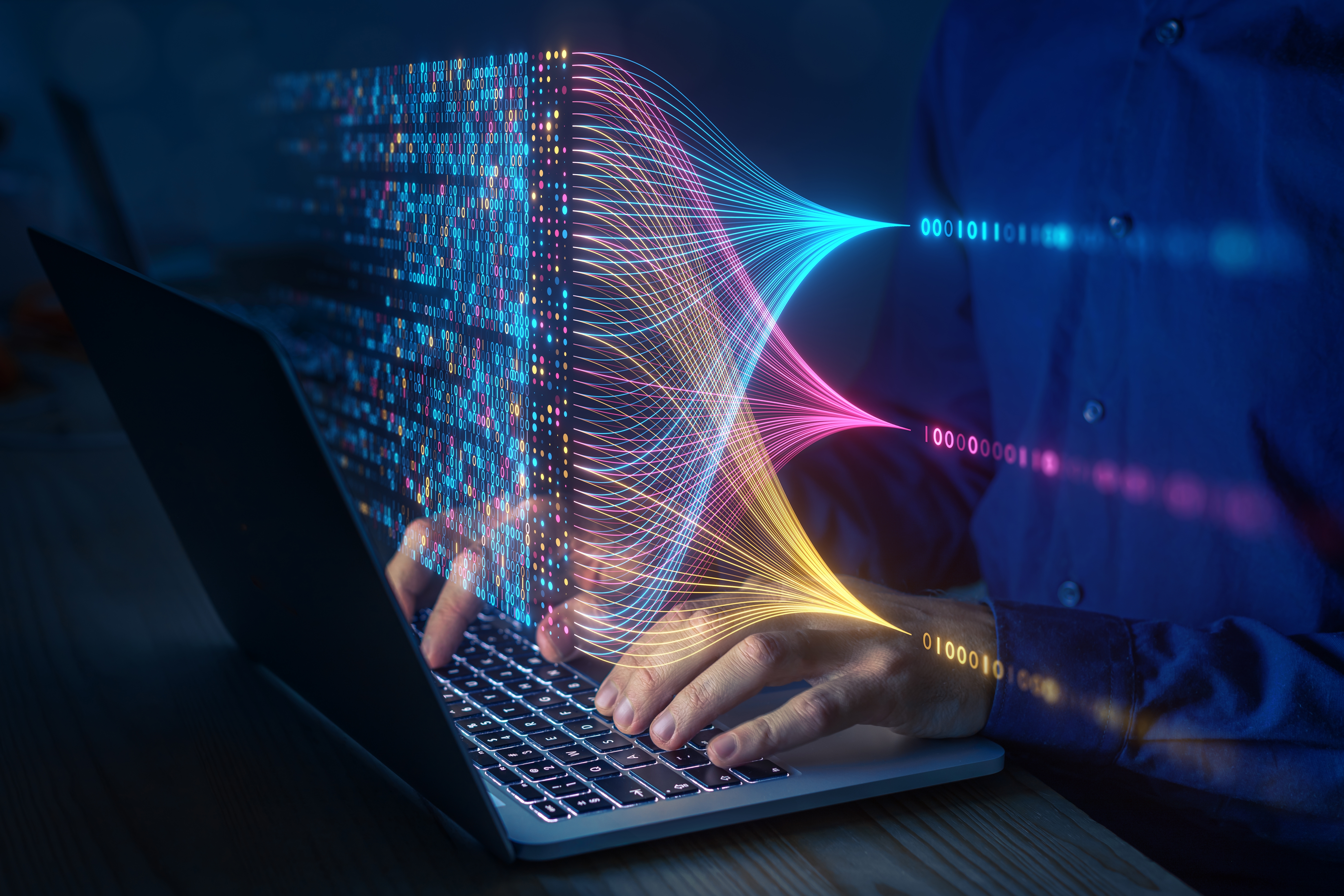
Artificial Intelligence (AI) is advancing at an unprecedented pace, evolving far beyond its traditional roles in analytics and operations. It has now emerged as a powerful driver of both innovation and creative expression. By processing vast amounts of information, identifying novel patterns, and offering unique insights that would otherwise remain hidden, AI equips individuals with tools that enhance and expand upon human ingenuity. Rather than replacing human creativity, this technology functions as a collaborative partner, working alongside people to generate fresh ideas and accelerate breakthroughs across both scientific and artistic domains.
Generative AI is fundamentally reshaping how we approach creative production, unlocking entirely new avenues for innovation in art, music, and content creation. Advanced AI models, specifically designed for generating visual art, composing music, or crafting written text, can produce original and often compelling results from simple user prompts. For example, artists can use these tools to experiment with uncharted visual styles or quickly generate multiple drafts of their work, which helps them overcome creative blocks and refine their ideas more efficiently. This iterative process not only saves valuable time but also fosters a deeper exploration of concepts, allowing creators to push their artistic boundaries and discover possibilities they might not have considered otherwise.
In the music industry, AI is introducing new dimensions to the creative process. It can compose original melodies, harmonize tracks, and even replicate the sound of specific instruments or the signature styles of well-known artists. This capability allows musicians to experiment with countless variations and explore musical combinations that go far beyond their usual methods. Instead of replacing the artist's unique vision, AI acts as a sophisticated tool to augment their creativity, helping them explore ideas that may not have occurred to them on their own and bring complex musical concepts to life.
For content creators and marketers, AI tools have become indispensable for managing routine and often repetitive tasks, such as drafting blog posts, creating social media updates, and generating initial ad copy ideas. By automating these time-consuming early stages of production, AI allows professionals to dedicate more of their attention to higher-level work like strategic planning, nuanced storytelling, and final refinement. This shift not only increases productivity but also enables the creation of more diverse and polished outputs. The ability to move from mundane tasks to focusing on what truly matters is transforming how creative professionals operate, empowering them to achieve more in less time.
In the realm of scientific research, AI is proving to be an extraordinary analytical engine, drastically accelerating the pace of discovery. Machine learning models excel at processing immense datasets from experiments, clinical trials, and scientific literature, completing complex analyses in days that would traditionally take human researchers months or even years. This remarkable ability to uncover subtle correlations, identify non-obvious patterns, and generate new, testable hypotheses makes AI an invaluable tool for scientists across all disciplines.
The practical applications of AI-assisted research are already evident in fields like materials science, where AI is used to predict the properties and potential uses of newly developed compounds before they are physically synthesized and tested. This predictive power saves significant resources and time. Similarly, in astronomy, AI algorithms analyze vast volumes of telescopic data to identify celestial objects or phenomena, such as new exoplanets or supernovae, that might otherwise go unnoticed in the noise. By automating the most labor-intensive aspects of data analysis, AI allows researchers to redirect their energy toward experimental design, the nuanced interpretation of results, and formulating the long-term direction of their studies. This powerful combination of speed and precision shortens the timeline from theoretical exploration to impactful discovery, enabling scientists to achieve breakthroughs that might once have seemed out of reach.
The most profound strength of AI in creative and innovative fields lies in its synergy with human intelligence. AI excels at generating countless options, identifying unexpected combinations, and processing data on an immense scale that is impossible for the human mind alone. Meanwhile, human creators bring indispensable elements to the table—contextual understanding, emotional depth, aesthetic judgment, and a clear sense of purpose. Together, this partnership allows for the creation of work that is not only innovative but also deeply and meaningfully human.
In this collaborative dynamic, AI often acts as a catalyst for human creativity. For instance, an AI-generated mood board, a preliminary concept sketch, or a short melody can spark a completely new direction for an artist, musician, or writer. These surprising ideas, generated without human biases, often inspire creators to think outside their established patterns and take their projects in bold, uncharted directions.
AI also enhances efficiency by automating the repetitive and time-consuming parts of the creative process. Tasks such as generating multiple design variations, organizing complex datasets for analysis, or drafting initial concepts can be handled effectively by AI. This frees creators to spend more time on the crucial work of refining, perfecting, and adding their unique touch to the final product. This streamlined workflow not only saves time but also encourages creators to experiment more freely and with less risk. By being able to quickly test and visualize numerous possibilities, artists and innovators can pursue paths that might have been too labor-intensive or costly to explore in the past. This emerging culture of experimentation fosters a level of creativity and innovation that was previously difficult to achieve.
As AI technologies continue to evolve and mature, their role in creativity and innovation will only grow, offering increasingly advanced tools to complement and enhance human talent. From producing original artistic works to accelerating groundbreaking scientific discoveries, AI is fundamentally transforming workflows across industries. These tools are not meant to compete with or replace human creativity but to amplify it, creating a powerful partnership that enables individuals and teams to reach new heights of discovery and expression.
The future of creativity is not a battle between humans and machines but a collaboration that combines the best of both. By blending AI's incredible power to process and generate with human intuition, emotion, and purpose, this synergy promises to unlock new horizons in art, science, and innovation. Together, humans and AI can push the boundaries of what is possible, opening up unprecedented opportunities to solve complex challenges, explore novel ideas, and inspire progress in ways we are only beginning to imagine.